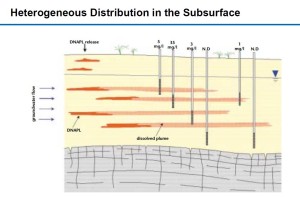
<h4>Soil Moisture and Contaminant Plumes</h4> An interesting presentation at a recent groundwater forum emphasised the importance of soil moisture in the distribution of contaminant vapour plumes particularly TCE. <h4>Relevance to Adelaide today</h4> This is of particular importance in Adelaide where numerous contaminated sites are being identified within or close to old industrial complexes. <h4>Transport of […]
Caliper logging of boreholes
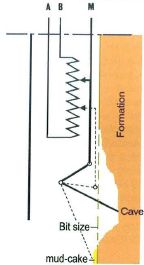
<h4>Caliper logging</h4> The caliper probe, a simple mechanical device, whose main functionality is to measure the internal diameter of a borehole or casing string within a borehole. Another purpose of a caliper arm is to push a section of a probe against the side of the borehole (for example density logging), known as sidewalling. […]
Gamma logging techniques for Uranium
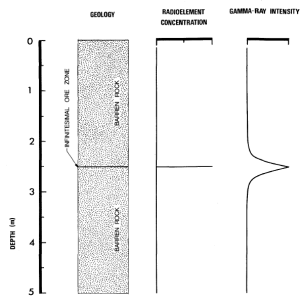
Gamma logging for uranium exploration and mining is an established technique for producing a rapid and cost effective depth based profile in a borehole of uranium ore grade. The most common measurement systems involve a scintillation system where gamma photons are converted to light energy enabling digital count rate conversion. The most common crystal used […]
Calibration, Normalisation, Verification
Probe calibration, normalisation and verification – what is the difference? Calibrated data, this is often stipulated by a client in a contract but the calibration is commonly misunderstood. Calibration A definition of calibration is: A set of operations which establish under specified conditions, the relationships between values indicated by the measuring instrument and corresponding values […]
Expectations of Your Geophysical Logging Contractor
A geophysical logging contractor is a small part of an exploration or mining development team. The team would likely include a drilling contractor(s), rig geologists, staff geologists, fieldies, logistics, and camp logistics. But if you are drilling deep boreholes or in unstable ground which requires geophysical logging off a rig, failure of a geophysical logging […]
Borehole Presentation – Deep Exploration Technologies CRC
I attended a presentation by DET CRC at the Australian Society of Exploration Geophysicists concerning the principles of the project and a current status. The talk outlined the guiding principles of the program: The need to drill more boreholes in areas covered by near surface deposits which result in little or no evidence of mineralisation […]
Downhole Geophysical Workshop – ASEG 2015
The Australian Society of Exploration Geophysicists event was held at the Perth Convention Centre on the Saturday before the main conference. There were over 40 attendees who were treated to a range of presentations from major geophysical logging contractors in WA (Borehole Wireline gave two presentations), operating companies and consultants. Our logging unit, BW30, was […]
Fullwave Sonic Logging
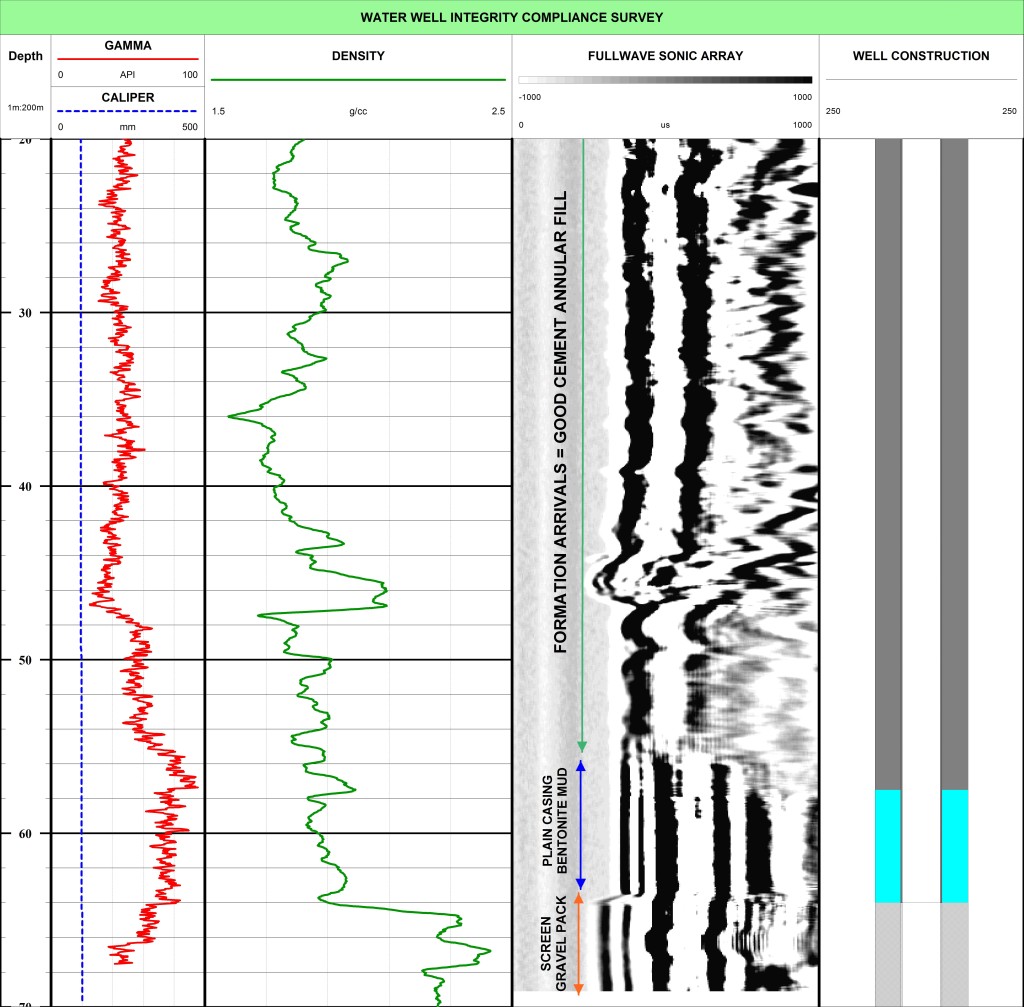
The fullwave sonic probe measures sonic waves (via pressure pulses) between a transmitter and a series of receivers – all at fixed distances in the probe. Velocity or transit time of the sound wave is a very useful parameter for engineering parameters such as rock strength, rock hardness, rock elastic properties and calibrating seismic surveys. […]
Borehole Imaging
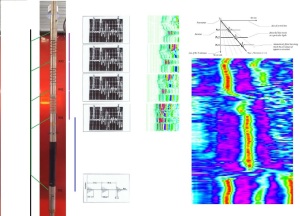
Borehole imaging probes are now a common service provided in boreholes drilled for mineral exploration, geotechnical investigations and groundwater programs. The major mineral borehole imaging methods are: Acoustic imaging: requires a fluid filled borehole Optical imaging: need to be able to see the borehole wall (air or clear fluid) Both methods are commonly requested on […]
Borehole Imaging – Optical Scanner
Full image coverage of a borehole wall in true colour – the optical scanner probe The optical scanner uses a high resolution digital camera together with magnetometers and accelerometers to provide an orientated true colour image of the borehole wall. Principal features Identifies and orientates (measures the dip angle and dip direction) of fractures, joints […]